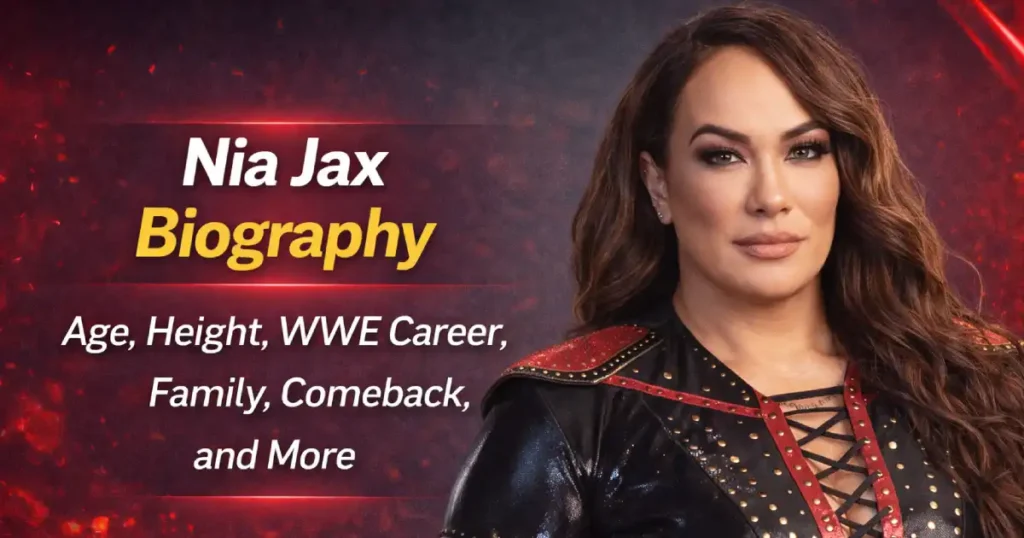
In the modern era of professional wrestling, strength, presence, and authenticity matter more than ever. Few superstars embody those qualities as powerfully as Nia Jax. Known for her dominant in-ring style and unapologetic confidence, she has carved out a unique place in WWE history. From breaking stereotypes to becoming a champion on the world’s biggest stage, her journey is a story of resilience, evolution, and impact.
This biography explores her early life, wrestling beginnings, WWE career highs and lows, championships, personal background, and what makes her one of the most talked-about figures in women’s wrestling.
Table of Contents
Early Life and Background
Born on May 29, 1984, in Sydney, Australia, Nia Jax was raised in a culturally diverse family that deeply influenced her identity. She later moved to the United States, where she grew up immersed in athletics. Before stepping into a wrestling ring, she played competitive basketball and developed a strong foundation in fitness and strength training.
She is of Samoan and German descent and belongs to the legendary Anoa’i wrestling family, one of the most respected dynasties in professional wrestling. This heritage played a role in her eventual transition into sports entertainment, though her path was far from easy.
Family Ties to Wrestling Royalty
One of the most fascinating aspects of Nia Jax’s story is her connection to wrestling royalty. She is a cousin of Dwayne “The Rock” Johnson, Roman Reigns, The Usos, and several other prominent wrestlers from the Anoa’i family.
Despite these connections, she has often stated that she wanted to earn her place on merit, not family name. Her journey reflects that determination, as she trained extensively and proved herself through performance rather than lineage.
WWE Training and NXT Debut
In 2014, Nia Jax signed with WWE and reported to the Performance Center in Orlando, Florida. She made her NXT debut in 2015, immediately standing out due to her size, power, and intimidating presence.
Unlike many female wrestlers of the time, she was marketed as an unstoppable force rather than a conventional competitor. Her NXT run helped establish her as a dominant heel and prepared her for the main roster spotlight.
Main Roster Breakthrough
The main roster debut of Nia Jax came in 2016 on Monday Night RAW. From the beginning, WWE positioned her as a powerhouse capable of overwhelming opponents with sheer strength.
She quickly entered high-profile rivalries and became a regular feature in major storylines. Her matches emphasized physicality, setting her apart in a division that was rapidly evolving toward athletic diversity.
Championship Success in WWE
A defining milestone in Nia Jax’s career came in 2018 when she captured the RAW Women’s Championship. This victory was historic—not only for her personally but also for representation in women’s wrestling.
Later that same year, she also won the WWE Women’s Tag Team Championship, further solidifying her status as a top-tier performer. These achievements demonstrated WWE’s trust in her star power and in-ring presence.
For a detailed look at other dominant women champions, you can explore this internal feature on WrestleRadar:
In-Ring Style and Persona
What makes Nia Jax truly unique is her in-ring style. She blends raw power with surprising agility, using her size as both a physical and psychological weapon. Her offense focuses on impactful strikes, slams, and power moves that emphasize dominance.
Her persona has evolved over time—from an intimidating enforcer to a more layered character who embraces confidence, sarcasm, and authority. This evolution has helped her remain relevant across different WWE eras.
Injuries, Controversies, and Resilience
Like many physically intense performers, Nia Jax has faced injuries and criticism throughout her career. She has been involved in moments that sparked debate among fans and analysts, particularly regarding in-ring safety.
However, her ability to bounce back—both mentally and professionally—speaks volumes about her resilience. She has openly addressed criticism, improved her craft, and returned stronger after setbacks, showcasing maturity and growth.
WWE Release and Comeback
In 2021, Nia Jax was released from WWE, a move that surprised many fans. Instead of fading away, she used the time to focus on personal growth, fitness, and redefining her public image.
Her eventual WWE return marked one of the most talked-about comebacks in recent years. The renewed version of her character appeared more confident, focused, and impactful, proving that reinvention can be a powerful tool in professional wrestling.
Representation and Cultural Impact
Beyond championships and matches, Nia Jax has had a significant cultural impact. She has been a vocal advocate for body positivity, diversity, and self-acceptance in an industry often criticized for narrow beauty standards.
Her presence challenged traditional norms and opened doors for performers of different body types and backgrounds. This legacy extends beyond wins and losses, making her influence deeply meaningful.
Life Outside the Ring
Outside wrestling, She is known for her candid personality and active social media presence. She enjoys fitness training, traveling, and engaging directly with fans. Her openness about personal struggles and confidence journeys has helped her build a loyal following beyond WWE programming.
For official career highlights and statistics, you can visit her WWE profile here:
FAQs
What is Nia Jax’s real name?
Her real name is Savelina Fanene.
Is Nia Jax related to The Rock?
Yes, she is part of the Anoa’i family and is a cousin of Dwayne “The Rock” Johnson.
Has Nia Jax won a WWE championship?
Yes, she has won the RAW Women’s Championship and the Women’s Tag Team Championship.
When did Nia Jax return to WWE?
She returned after her 2021 release, making a high-profile comeback that gained major attention.
What makes Nia Jax unique in WWE?
Her powerhouse style, physical dominance, and role in promoting body positivity set her apart.
Conclusion
The journey of Nia Jax is one of strength, reinvention, and unapologetic individuality. From her early athletic background to championship gold, from controversy to comeback, she has continuously evolved in an ever-changing wrestling landscape.
Her story goes beyond titles—it’s about representation, resilience, and redefining what a WWE superstar can look like. As her career continues to unfold, her impact on women’s wrestling and sports entertainment remains undeniable.

Alex Jordan is the creator and lead author of Wrestleradar.com, where he covers wrestling news, match breakdowns, and behind-the-scenes insights with passion and detail. With a strong eye for storytelling and industry analysis, Alex delivers content that keeps wrestling fans informed, engaged, and entertained.