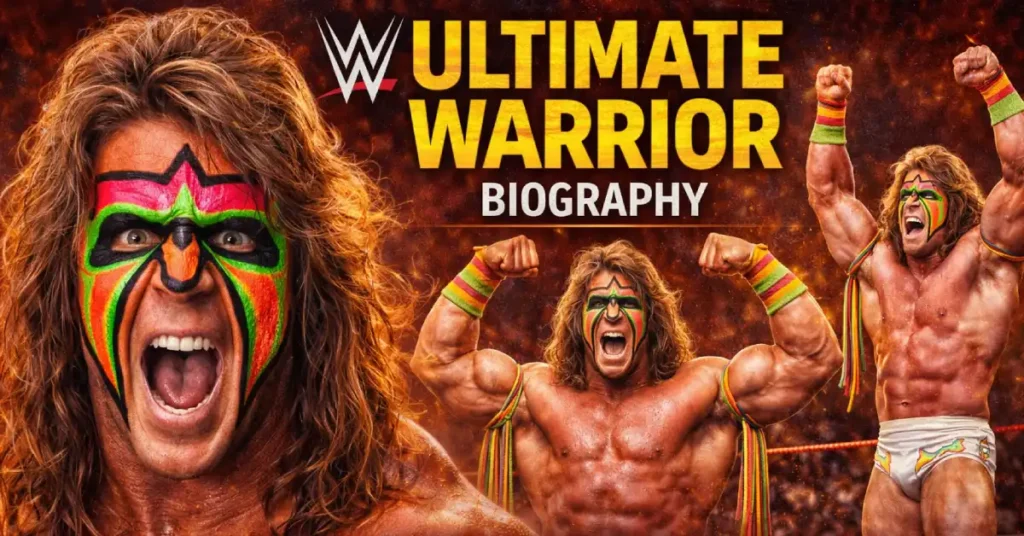
The Ultimate Warrior remains one of the most electrifying and unforgettable performers in professional wrestling history. Known for his explosive entrances, unmatched intensity, and colorful face paint, the Ultimate Warrior transformed sports entertainment during the late 1980s and early 1990s. His larger-than-life personality helped redefine what a wrestling superstar could be, making him one of WWE’s most recognizable icons.
This detailed Warrior biography explores his early life, wrestling career, rise to fame, controversies, personal struggles, and enduring legacy in WWE history.
Table of Contents
Early Life and Background
The wrestling legend known as the Ultimate Warrior was originally named James Brian Hellwig, born on June 16, 1959, in Crawfordsville, Indiana, USA. Raised in a modest household, Hellwig developed a passion for athletics early in life. He was heavily involved in bodybuilding during his teenage years, which eventually became the foundation for his wrestling career.
Before entering professional wrestling, Hellwig pursued bodybuilding competitively. His dedication to physical fitness helped him build the muscular physique that later became his trademark inside the ring.
During the early 1980s, he joined several bodybuilding competitions and even co-founded a bodybuilding team known as the Powerteam USA group. This period played a crucial role in shaping the intense persona that fans later associated with the Ultimate Warrior.
Entry Into Professional Wrestling
The transition from bodybuilding to wrestling happened in 1985 when Hellwig began training as a professional wrestler. Alongside fellow bodybuilder Steve Borden, who later became famous as Sting, he formed a tag team initially known as The Blade Runners.
The duo gained experience in regional promotions, including the Universal Wrestling Federation (UWF). While their partnership did not last long, it helped Hellwig gain exposure and refine his character work.
Soon after, Hellwig reinvented himself and adopted the persona that would define his career — the Ultimate Warrior.
WWE Debut and Rapid Rise to Stardom
He began his journey with WWE, which was called the WWF at the time, when he made his official debut in 1987. His character was unlike anything fans had seen before. With neon face paint, tassels, intense promos, and explosive ring entrances, he quickly captured audience attention.
Unlike traditional wrestlers known for technical skills or microphone abilities, Warrior relied on raw energy and charisma. His unique presence connected instantly with younger audiences, turning him into a merchandise powerhouse.
Within a short time, the Ultimate Warrior became one of WWE’s fastest-rising stars.
You may also explore another fan-favorite WWE superstar story here: Kofi Kingston Biography
Intercontinental Championship Success
A major milestone in Warrior biography came when he defeated The Honky Tonk Man at SummerSlam 1988 in just seconds to win the Intercontinental Championship.
This victory shocked fans and instantly elevated his status. He dominated the mid-card scene, delivering high-energy matches and becoming one of WWE’s most popular babyfaces.
His feuds with Rick Rude showcased his ability to draw massive crowd reactions and solidified his reputation as a main-event-caliber performer.
WrestleMania VI: Historic Victory Over Hulk Hogan
The defining moment of the Ultimate Warrior’s career occurred at WrestleMania VI in 1990 when he faced Hulk Hogan in a champion-versus-champion match.
This bout remains one of WWE’s most historic matches. The Ultimate Warrior defeated Hogan cleanly to become both the WWF Champion and Intercontinental Champion simultaneously — an unprecedented achievement at the time.
The victory symbolized a passing of the torch and marked the peak of Ultimate Warrior’s popularity.
WWF Championship Reign
After capturing the WWF Championship, he emerged as one of the promotion’s leading figures and represented the brand during its peak popularity. His energetic persona resonated strongly with fans, especially children, making him a merchandising sensation.
However, his championship reign faced challenges. Critics often argued that his in-ring style lacked technical depth compared to other wrestlers. Behind the scenes, tensions with WWE management also began to grow.
Despite these issues, he remained one of the most recognizable stars in wrestling worldwide.
Departure and Controversies
The Ultimate Warrior’s relationship with WWE became complicated due to contract disputes and disagreements over pay. In 1991, he was released from the company following conflicts related to SummerSlam negotiations.
This marked the beginning of a turbulent period in Warrior biography. He made several returns to WWE, including brief runs in 1992 and 1996, but none replicated his earlier success.
His 1996 return included a high-profile match against Triple H at WrestleMania XII, though it lasted only a short time before another departure.
Life Outside Wrestling
After stepping away from wrestling, Hellwig focused on motivational speaking and personal projects. He legally changed his name to Warrior, reflecting how deeply he identified with his wrestling persona.
During this time, he shared controversial opinions through public appearances and online writings, which sparked debates among fans and critics.
Despite controversies, his influence on wrestling culture remained undeniable.
WWE Hall of Fame Induction
One of the most emotional chapters in Warrior biography occurred in 2014 when he reconciled with WWE after years of tension.
He was inducted into the WWE Hall of Fame during WrestleMania 30 weekend. The moment represented closure between Warrior and the company that made him a superstar.
During his induction speech, he delivered a heartfelt message thanking fans and acknowledging his journey.
Final Appearance and Passing
In April 2014, just days after appearing on WWE television and delivering a powerful speech on Monday Night Raw, Warrior tragically passed away on April 8, 2014, at the age of 54 due to a heart attack.
His sudden death shocked the wrestling world. Many fans considered his final speech eerily prophetic, as he spoke about legacy and immortality through fans’ memories.
Legacy of the Ultimate Warrior
The Ultimate Warrior’s legacy remains strong decades after his prime.
He revolutionized wrestling entrances, character presentation, and fan engagement. His influence can still be seen in modern WWE superstars who emphasize charisma and larger-than-life personas.
Key elements of his legacy include:
- He was widely recognized as one of the most prominent and influential performers of WWE’s Golden Era.
- WrestleMania VI historic victory
- Iconic face paint and entrance style
- Inspiration for future performers
- Cultural impact beyond wrestling
Warrior proved that connection with fans could transcend technical wrestling ability.
Championships and Achievements
Major Accomplishments:
- WWF Champion (1 time)
- Intercontinental Champion (2 times)
- WWE Hall of Fame Inductee (2014)
- WrestleMania Main Event Winner
- One of WWE’s top merchandise sellers
These achievements highlight why Warrior remains a legendary figure.
Personality and Wrestling Style
The Ultimate Warrior’s wrestling style focused on power moves, explosive energy, and emotional storytelling rather than technical wrestling.
His intense promos, often filled with symbolic and passionate language, became a defining part of his character.
Fans remember him sprinting to the ring, shaking the ropes violently, and delivering unstoppable offense — moments that defined an entire era of wrestling.
Influence on Modern Wrestling
Many modern wrestlers credit the Warrior for inspiring character-driven performances. His success proved that personality and audience connection could be just as important as in-ring technique.
WWE continues to honor his legacy through the annual Warrior Award, recognizing individuals who demonstrate strength and perseverance.
FAQs
Who was the Ultimate Warrior?
He was a WWE superstar known for his energetic performances, colorful face paint, and championship success during the late 1980s and early 1990s.
What was Ultimate Warrior’s real name?
His real name was James Brian Hellwig, later legally changed to Warrior.
Did Ultimate Warrior defeat Hulk Hogan?
Yes, he defeated Hulk Hogan at WrestleMania VI to win the WWF Championship.
When did Ultimate Warrior die?
He passed away on April 8, 2014, due to a heart attack.
Is Ultimate Warrior in the WWE Hall of Fame?
Yes, he was inducted into the WWE Hall of Fame in 2014.
Why was Ultimate Warrior so popular?
His intense energy, unique character, and strong fan connection made him one of wrestling’s biggest stars.
Conclusion
Warrior biography tells the story of a performer who changed professional wrestling forever. From humble beginnings as a bodybuilder to becoming one of WWE’s most iconic champions, the Ultimate Warrior created a legacy built on passion, intensity, and unforgettable moments.
Despite controversies and challenges, his impact on sports entertainment remains undeniable. Fans continue to celebrate the Ultimate Warrior not only for his achievements but also for the powerful connection he created with audiences worldwide.
His spirit lives on every time a superstar runs to the ring with unstoppable energy — proving that legends never truly fade.

Alex Jordan is the creator and lead author of Wrestleradar.com, where he covers wrestling news, match breakdowns, and behind-the-scenes insights with passion and detail. With a strong eye for storytelling and industry analysis, Alex delivers content that keeps wrestling fans informed, engaged, and entertained.