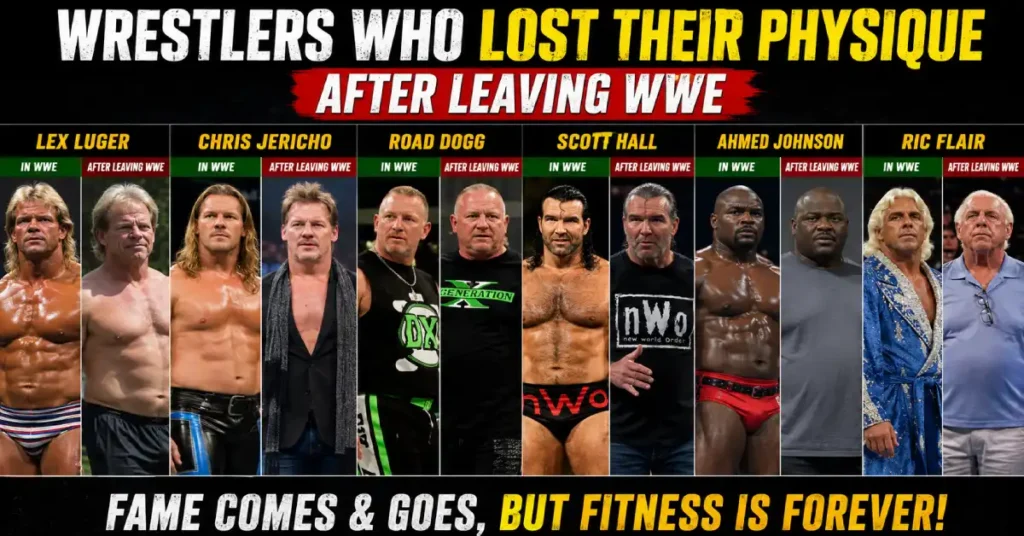
Wrestlers who lost their physique after leaving WWE prove one uncomfortable truth about professional wrestling — maintaining an elite body is far easier when your job depends on it. The grueling travel schedule, the pressure of weekly television, and the knowledge that millions of fans are watching every week creates a discipline that retirement quickly removes. Once the contracts end and the cameras stop rolling, some of wrestling’s most iconic physiques have changed dramatically. According to WWE’s official Wellness Policy, active roster members face strict physical compliance standards that simply no longer apply once a contract ends. Here are the wrestlers who lost their physique most noticeably after departing WWE.
Table of Contents
1. Lex Luger — From Greatest Physique in Wrestling to a Wheelchair
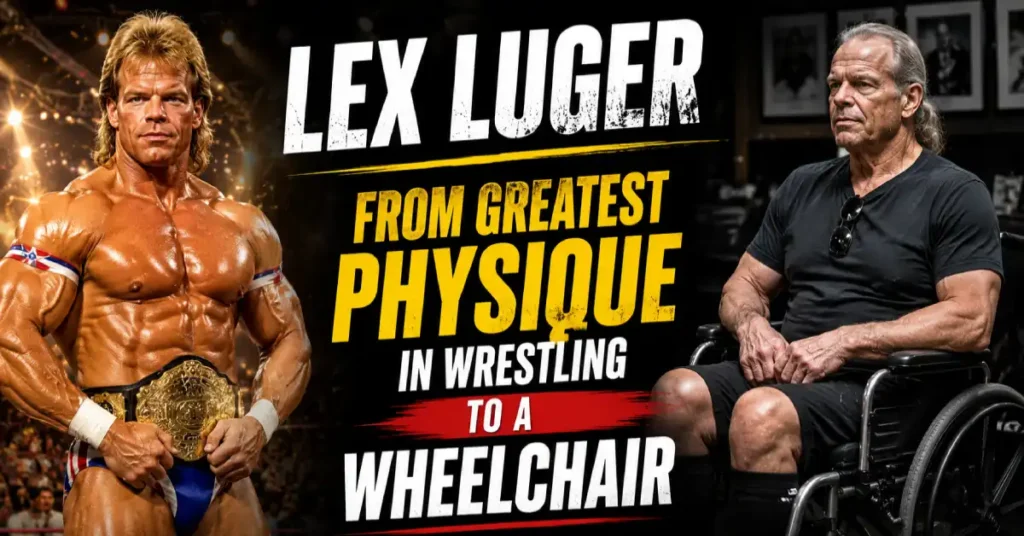
Luger is perhaps the most extreme case of a wrestlers who lost their physique — and then some. During his peak in WWF and WCW, Luger was widely regarded as one of the greatest physiques professional wrestling had ever produced — a genuine bodybuilder-level figure who turned his appearance into a central part of his “Total Package” character. Today, however, Luger’s situation couldn’t be more different. After suffering a spinal stroke in 2007 that left him partially paralyzed, Luger now uses a wheelchair for much of his daily movement. The contrast between his peak and current condition is one of the most striking examples on this list — a reminder that sometimes it isn’t lifestyle choices but health events that change everything.
2. Chris Jericho — A Gradual Decline Hard to Ignore
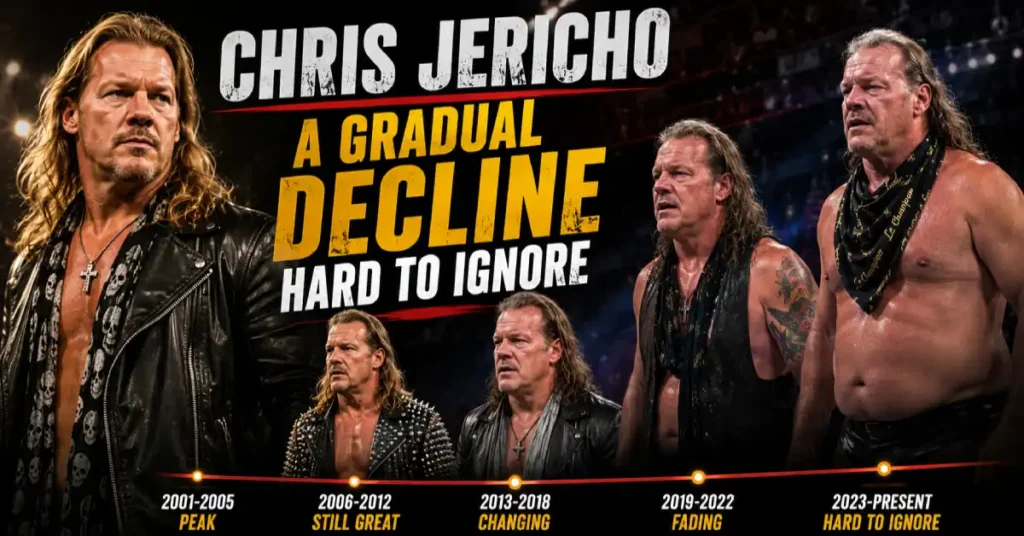
Chris Jericho is another high-profile wrestlers who lost their physique after leaving WWE for good in 2018. He was never the most physically imposing wrestler on the roster, but during his WWE years he was consistently in excellent shape — lean, athletic, and carrying himself with the kind of physical confidence that belied his smaller frame relative to his opponents. After signing with AEW, Jericho’s fitness began to fluctuate visibly. There have been stretches where Jericho looked notably heavier than his WWE years, with a weight gain that fans and commentators alike found hard to overlook during certain AEW television appearances. To his credit, Jericho has had periods of getting back into strong shape — but his overall physical trajectory since leaving WWE has been a steady downward slide compared to his peak years.
3. Road Dogg — Letting Go After D-Generation X
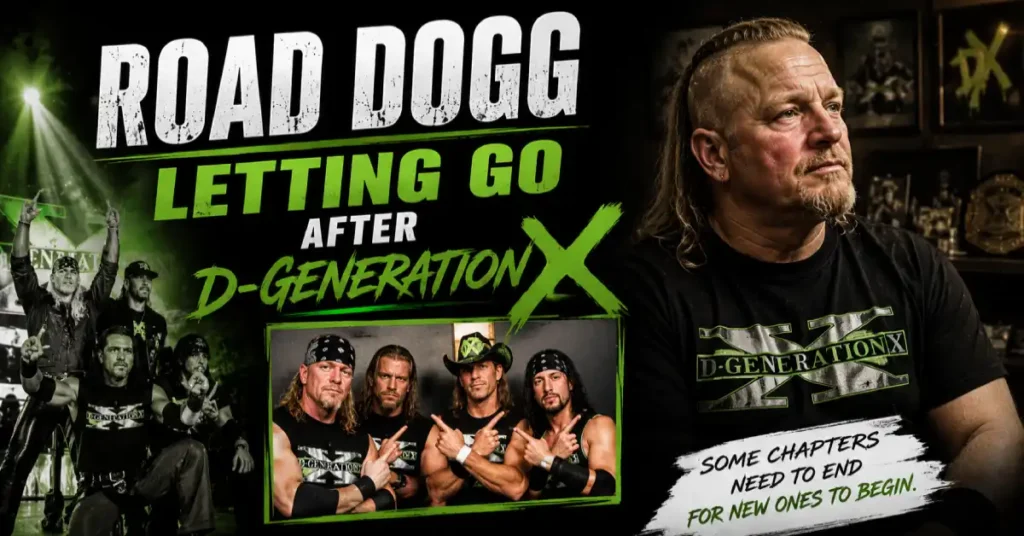
Road Dogg was never the most physically intimidating member of D-Generation X — that was always Billy Gunn’s department — but during his active WWE run he was always in respectable shape for a mid-card performer working a demanding schedule. Since hanging up his boots, Dogg has openly taken a much more relaxed approach to fitness. When he has appeared on WWE television in recent years for legends-type appearances, the physical changes have been clear. To his credit, Road Dogg has never pretended otherwise — and fans have always loved him more for his promo ability and charisma than his physique anyway.
4. Scott Hall — Personal Demons and the DDP Comeback
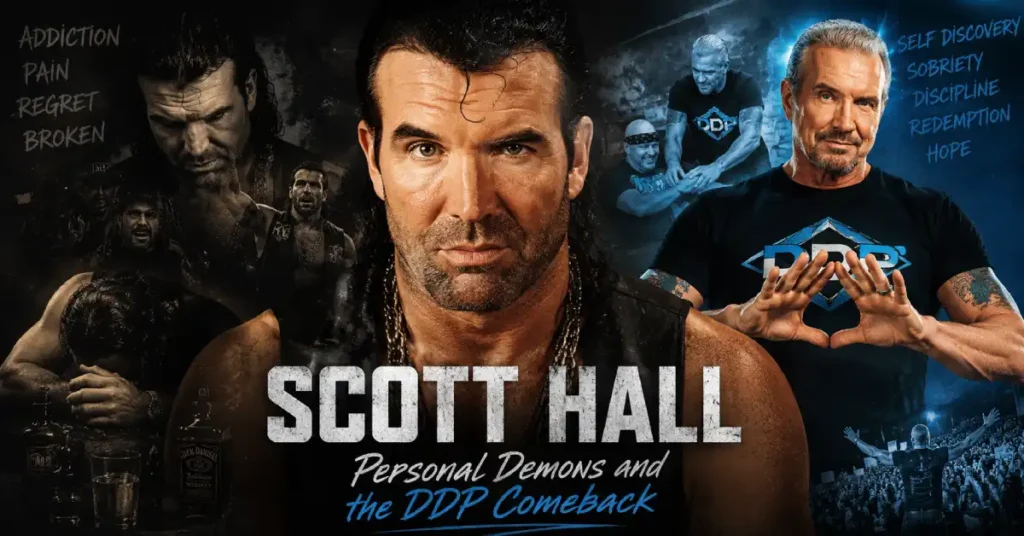
Scott Hall is one of the most talked-about wrestlers who lost their physique after WWE — and his story goes in both directions. After leaving WWE in 1996, Hall’s well-documented battles with alcohol addiction took a severe toll on his physical appearance. By the time he resurfaced in TNA in 2002 and beyond, the chiseled Razor Ramon physique that had made him a superstar was visibly gone — replaced by a noticeably heavier frame and the kind of physical decline that happens when personal struggles take over completely. The redemption chapter came through Diamond Dallas Page’s DDP Yoga program, which helped Hall get back into remarkable shape in his final years before his death in 2022. His story is ultimately one of loss, recovery, and the remarkable capacity of the human body to respond when given the right tools.
5. Ahmed Johnson — Weight Spiraled Out of Control After WWE
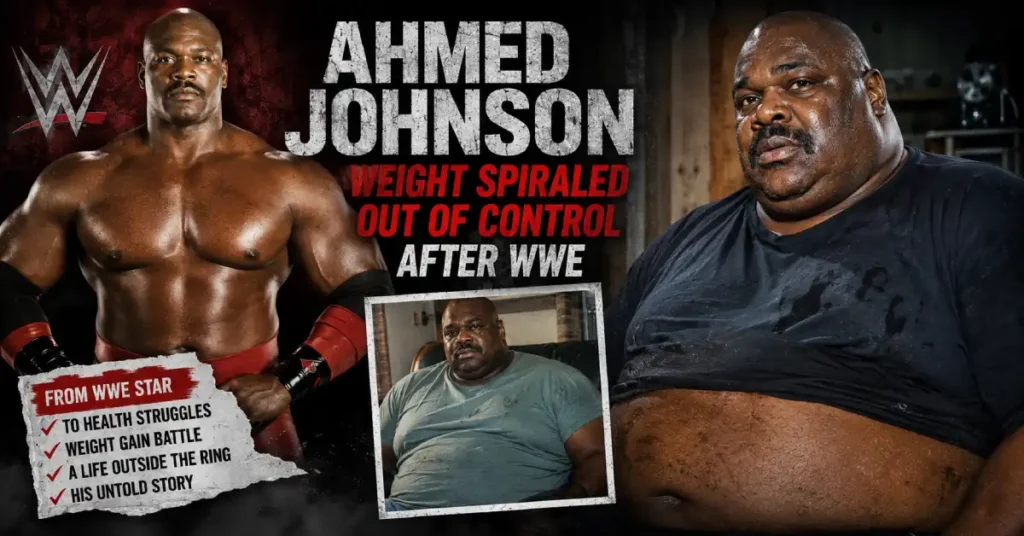
Ahmed Johnson is a textbook example of a wrestlers who lost their physique after WWE — made all the more striking because his peak condition was so exceptional. He made history as the first African American wrestler to win a singles title in WWE, and his physique during his Intercontinental Championship run in 1996 was genuinely remarkable — a former Dallas Cowboys linebacker-level frame that made him one of the most physically imposing performers on the roster. An undiagnosed kidney problem forced him to vacate the title and derailed what should have been a major push. After moving to WCW, his weight began gaining at a rate he couldn’t control, and following his 2003 retirement, the downward physical trajectory continued. When Johnson has appeared at wrestling conventions in recent years, the contrast with his late-1990s peak has been stark.
6. Ric Flair — Living the Gimmick Had a Price
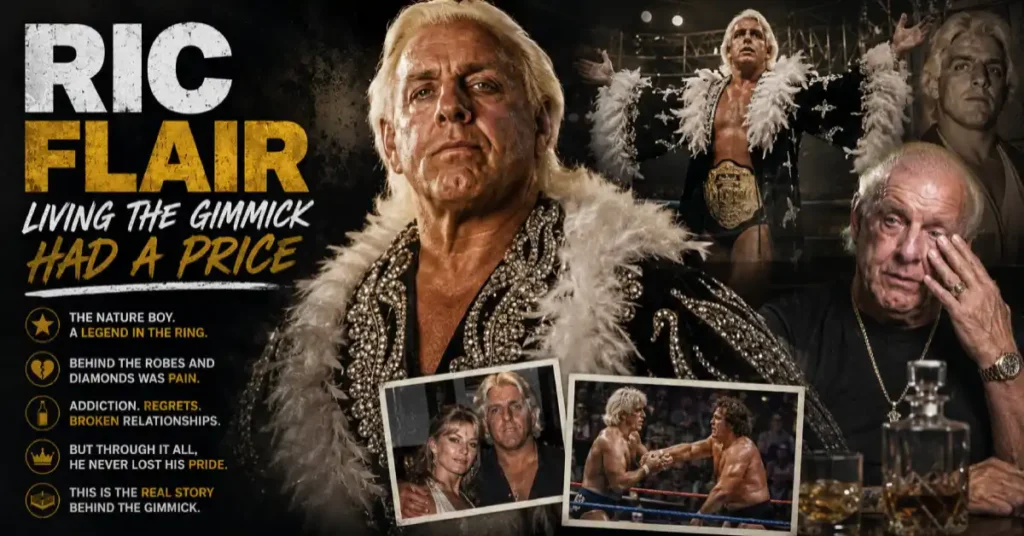
Ric Flair is widely regarded as the greatest professional wrestler of all time — but his post-WWE physical journey reflects the cost of a career built as much on excess as on athletic excellence. Flair was famously never the most muscular performer in wrestling, but during his prime he carried himself with the kind of physical authority that made the “Nature Boy” character believable. By the time his later WWE runs wound down, Flair’s physique had noticeably softened — a combination of age, multiple serious health scares including a near-fatal bowel obstruction in 2017 and a serious cardiac event, and a lifestyle that his autobiography confirms included decades of extremely hard living on and off the road. Despite all of that, Flair famously returned for one final match at 73 in 2022, showing that even a changed physique couldn’t extinguish his competitive spirit.
7. Mick Foley — Retired, Indulged, Then Main Evented WrestleMania
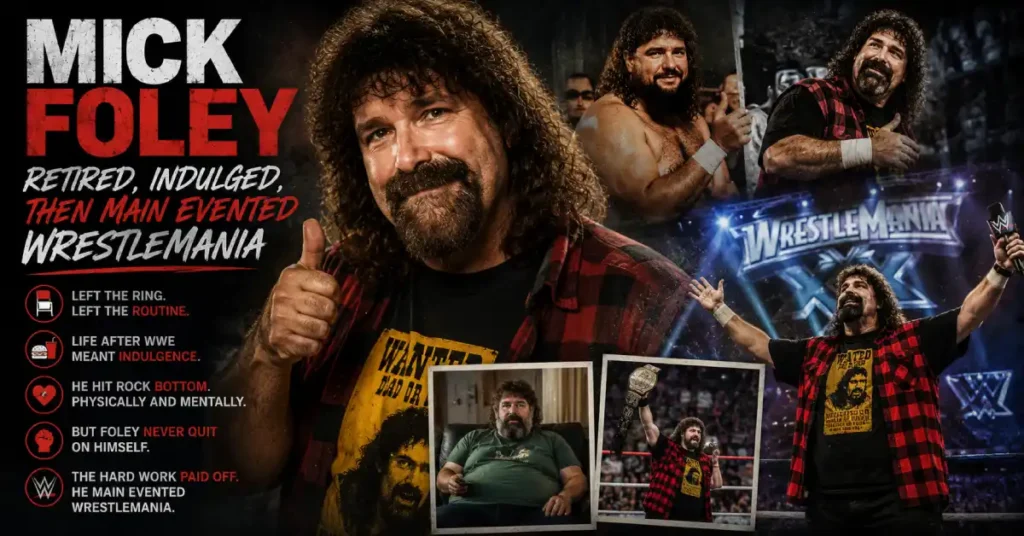
Mick Foley’s body transformation story is one of wrestling’s funniest — and most relatable. Foley is actually a wrestlers who lost their physique faster than almost anyone else on this list — in just six weeks. After being “forced to retire” in a Hell in a Cell match against Triple H at No Way Out 2000, Foley immediately allowed himself to relax and enjoy retirement. Six weeks later, he was called back to main event WrestleMania 2000. The problem? He hadn’t exactly been training hard in those six weeks. The match happened anyway, and while Foley delivered one of his trademark performances, his noticeably changed physique in just six weeks of retirement became a famous talking point among fans — a perfect illustration of how quickly the discipline of professional wrestling disappears once the pressure of weekly television is removed.
8. Tatanka — Prime Physique Gone After Sporadic Returns
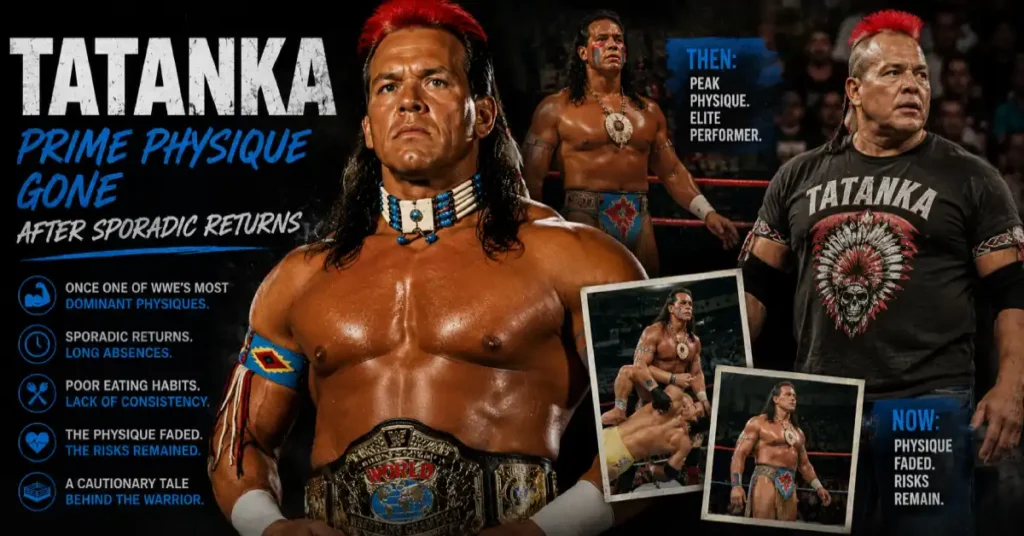
Tatanka had one of the more impressive physiques in early-1990s WWE — a genuine bodybuilder-level frame combined with a legitimate Native American heritage that gave his character real authenticity. He was popular enough during his peak to hold a lengthy undefeated streak, but never quite broke through the glass ceiling to the main event. When Tatanka returned to WWE for brief stints in 2005 and 2010, the physique that had been one of his calling cards was clearly no longer what it once was. The contrast between his early-1990s peak and his later appearances became a regular topic among wrestling fans who remembered him from his initial run.
9. Tazz — From ECW Destroyer to Commentator’s Chair
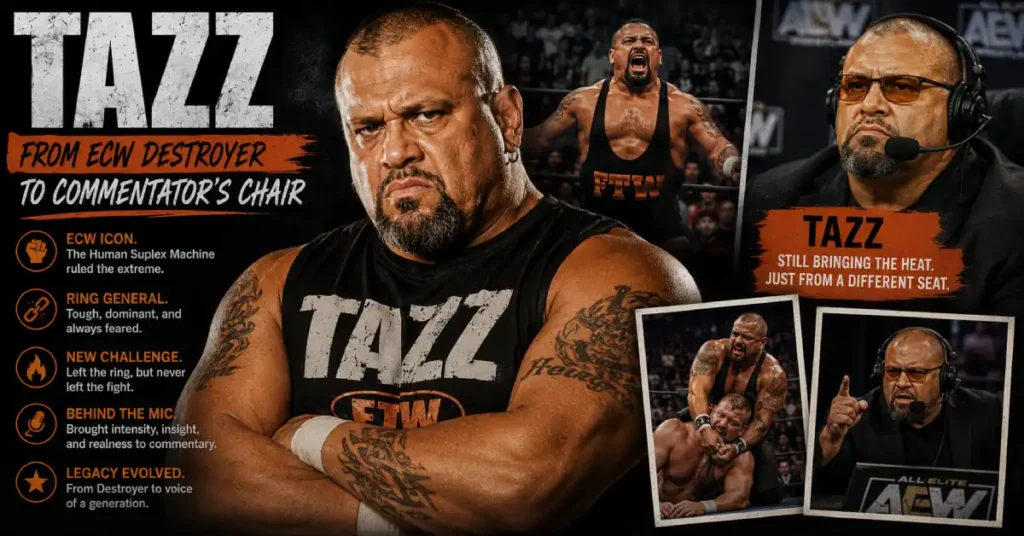
Tazz was never a physique star in the traditional wrestling sense — stocky and powerfully built rather than lean and chiseled — but during his ECW peak he carried a legitimate aura of physical menace that made his “human suplex machine” persona genuinely credible. Once he transitioned to a full-time commentary role in WWE and later TNA, the physical activity that had maintained even his modest peak condition essentially stopped. The result was a progressive weight gain that became increasingly obvious over the years. The commentator’s chair, it turns out, is very effective at removing whatever conditioning a career of hard wrestling built up.
10. Brutus Beefcake — From Physique Showcase to Unrecognizable
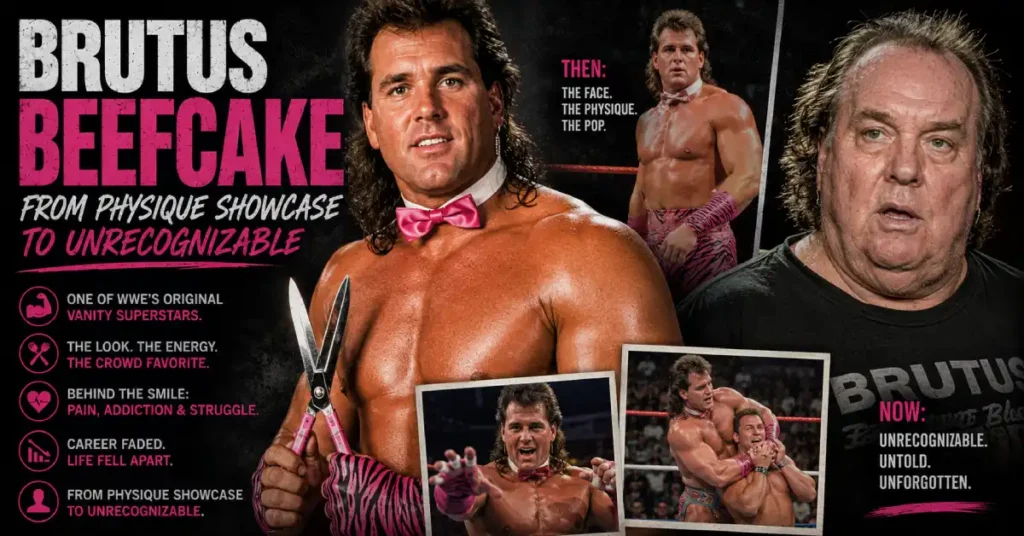
Brutus “The Barber” Beefcake was very much a product of the 1980s WWE aesthetic — a time when a big, impressive-looking physique could carry a performer a long way even if the in-ring work was average. His association with Hulk Hogan gave his career a longevity it might not otherwise have enjoyed. However, Beefcake’s post-WWE years saw his famous physique depart almost entirely — a transformation so complete that some long-time fans have found him almost unrecognizable at convention appearances in recent years. His career after WCW largely faded without Hogan’s influence, and without the professional obligation to maintain his look, the results became increasingly obvious.
Why Do Wrestlers Who Lost Their Physique After WWE All Tell the Same Story?
The pattern is consistent enough across decades of wrestling history that it’s worth understanding why it happens so regularly. Several factors combine to create the perfect conditions for physical decline once a WWE contract ends:
- No more physical accountability — WWE’s weekly television schedule creates constant visible pressure to stay in shape. Remove that audience and that accountability disappears overnight.
- No more performance-enhancing substances — WWE’s Wellness Policy created real compliance pressure during active contracts that no longer applies after departure.
- Less structured daily routine — The demanding travel schedule, while physically grueling, creates a regimented daily structure built around training, performing, and recovering. Retirement removes all three.
- Mental adjustment challenges — Many wrestlers have spoken openly about the psychological difficulty of leaving a career that defined their identity for decades, and the lifestyle changes that sometimes follow.
- Accumulated injuries — Decades of bumps, falls, and physical punishment often make the intense training required to maintain an elite physique genuinely painful or medically inadvisable later in life.
FAQ — Wrestlers Who Lost Their Physique After WWE
Which wrestler had the most dramatic physique change after leaving WWE?
Lex Luger’s transformation is arguably the most dramatic case of a wrestlers who lost their physique — going from one of the greatest physiques in wrestling history to using a wheelchair following a spinal stroke in 2007. Scott Hall’s transformation due to substance abuse struggles is also frequently cited as one of the most visible physical declines in wrestling history.
Why do wrestlers gain weight after retiring?
The most common reasons include the removal of daily professional accountability for their appearance, reduced physical activity after leaving a demanding travel and performance schedule, accumulated injuries that make intense training difficult, and the psychological adjustment challenges that often accompany leaving a career that defined their identity for decades.
Did any wrestlers on this list get back into shape?
Yes — Scott Hall made a remarkable physical recovery with help from Diamond Dallas Page’s DDP Yoga program and looked genuinely impressive in his final years. Kane also got back into exceptional shape after a mid-career decline, reportedly looking better at nearly 60 than he had in years.
Final Thoughts
Every wrestlers who lost their physique after leaving WWE tells a version of the same story — that maintaining an elite body is one of the hardest parts of a professional wrestling career, and that the discipline required is almost entirely driven by external pressure rather than personal motivation alone. Without the cameras, the contract clauses, and the weekly audience of millions, even some of wrestling’s most iconic physiques have proved surprisingly temporary. For further reading on how WWE handles performer health, WWE’s Wellness Policy page outlines the standards active roster members are held to.
For more wrestling content, keep following WrestleRadar. Also check out our guides on Brock Lesnar Biography, WWE Superstars With Shocking Net Worth, and Top 10 WWE Wrestlers Who Were Fired and Rehired.

Alex Jordan is the creator and lead author of Wrestleradar.com, where he covers wrestling news, match breakdowns, and behind-the-scenes insights with passion and detail. With a strong eye for storytelling and industry analysis, Alex delivers content that keeps wrestling fans informed, engaged, and entertained.