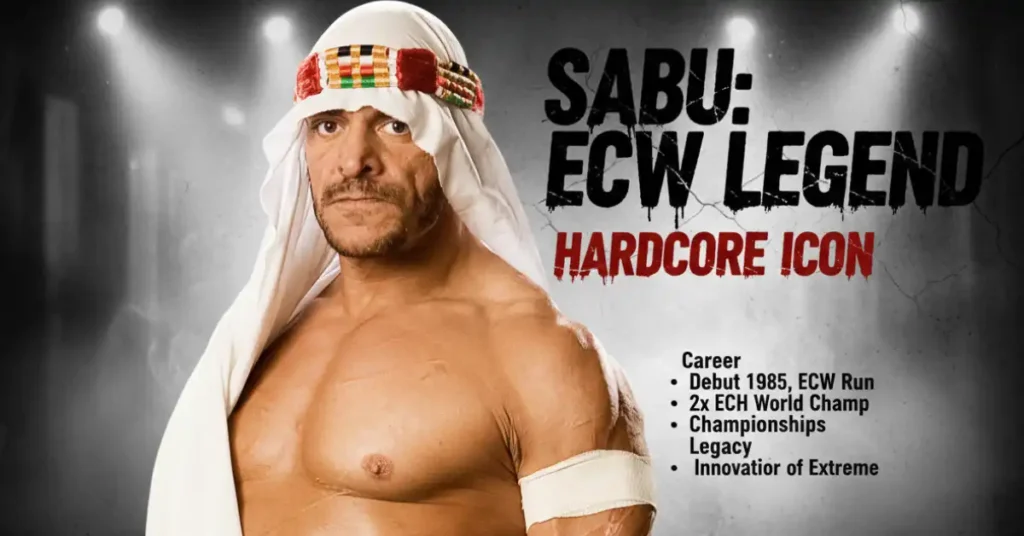
Few professional wrestlers have pushed their bodies to the absolute limit like Sabu Wrestler. Known worldwide as one of the most fearless and extreme competitors in wrestling history, Sabu built his reputation through pain, innovation, and unmatched dedication to hardcore wrestling. His high-risk style, use of tables and chairs, and willingness to sacrifice his own body made him a cult icon among fans who craved intensity and authenticity.
From underground promotions to the global stage, Sabu’s journey is one of resilience, reinvention, and legendary violence that forever changed professional wrestling.
Table of Contents
Early Life and Family Background
Born as Terry Michael Brunk on December 12, 1964, in Staten Island, New York, Sabu Wrestler grew up surrounded by wrestling influence. He is the nephew of wrestling legend The Sheik, a ruthless and feared performer who played a crucial role in shaping Sabu’s mindset and in-ring philosophy.
Training under The Sheik was brutal and unforgiving. Instead of traditional wrestling schools, Sabu learned toughness, pain tolerance, and psychological warfare. This foundation helped him develop a unique identity that separated him from traditional technical wrestlers early in his career.
Early Wrestling Career and International Experience
Before becoming a hardcore icon in the United States, Sabu Wrestler gained valuable experience wrestling internationally. He competed in Japan, Mexico, and various independent circuits where extreme wrestling was both respected and encouraged.
In Japan, Sabu’s willingness to take punishment earned him respect among hardcore audiences. The Japanese wrestling culture, which values realism and intensity, helped refine his extreme style. These early international experiences gave him confidence and sharpened his dangerous in-ring persona.
Rise to Fame in ECW
Sabu’s career reached legendary status during his time in Extreme Championship Wrestling (ECW). Under Paul Heyman’s creative vision, Sabu Wrestler became the embodiment of ECW’s violent, rebellious identity.
His feuds with Rob Van Dam, Taz, and The Sandman produced some of the most unforgettable hardcore matches of the 1990s. Tables, barbed wire, steel chairs, and ladders were not gimmicks—they were tools of survival. Fans admired Sabu not just for winning matches, but for enduring them.
ECW transformed Sabu into a cult hero whose name became synonymous with hardcore wrestling worldwide.
Transition to WWE
In 2006, Sabu Wrestler made his long-anticipated debut in World Wrestling Entertainment (WWE) as part of the revived ECW brand. His arrival introduced mainstream audiences to a style far more extreme than what WWE fans were accustomed to.
Although injuries limited his WWE run, Sabu still delivered memorable performances, including appearances at WrestleMania and ECW One Night Stand events. His hardcore reputation remained intact, proving that even on the biggest stage, his fearless approach could not be tamed.
Wrestling Style and In-Ring Persona
What made Sabu Wrestler truly unique was his unconventional offense. He blended high-flying moves with brutal hardcore tactics, often using his own body as a weapon. His signature chair-assisted maneuvers and suicidal dives became staples of extreme wrestling.
Unlike traditional talkative characters, Sabu rarely spoke. His silence added mystery and intensity, making his actions inside the ring speak louder than words. Pain was not something he avoided—it was part of his storytelling.
Championships and Career Achievements
Over his long career, Sabu Wrestler captured multiple championships across various promotions. His accolades include ECW World Heavyweight Championship reigns, tag team titles, and international honors.
While championships mattered, Sabu’s true legacy lies in influence rather than trophies. He helped popularize hardcore wrestling and inspired a generation of extreme performers who followed his path of fearless innovation.
Personal Life and Real-World Struggles
Behind the extreme persona, Sabu Wrestler faced significant personal challenges. Years of hardcore matches resulted in chronic injuries, surgeries, and physical wear that would have ended most careers much earlier.
Despite these obstacles, Sabu continued wrestling well beyond expectations, driven by passion rather than fame. His perseverance earned him respect not only from fans but also from fellow wrestlers who understood the cost of his dedication.
Legacy and Impact on Wrestling
The influence of Sabu Wrestler extends far beyond ECW or WWE. Modern hardcore, deathmatch, and extreme wrestlers owe much of their style to Sabu’s fearless experimentation.
He proved that wrestling could be raw, emotional, and dangerous while still telling powerful stories. His willingness to take risks reshaped fan expectations and permanently altered the landscape of professional wrestling.
FAQs
Who is Sabu Wrestler?
Sabu Wrestler is a professional wrestling legend best known for his hardcore style and iconic run in ECW.
What is Sabu’s real name?
His real name is Terry Michael Brunk.
Was Sabu related to The Sheik?
Yes, he is the nephew of wrestling legend The Sheik.
Did Sabu wrestle in WWE?
Yes, he competed in WWE during the ECW brand revival in 2006–2007.
Why is Sabu considered a hardcore legend?
Because of his extreme wrestling style, high-risk matches, and lasting influence on hardcore wrestling.
Conclusion
The story of Sabu Wrestler is one of pain, passion, and unmatched bravery. From underground arenas to global platforms, he never compromised his identity or softened his style. His career is a testament to what happens when dedication outweighs fear and when legacy is built through sacrifice rather than comfort.
Sabu will forever remain a symbol of hardcore wrestling—raw, unpredictable, and unforgettable.

Alex Jordan is the creator and lead author of Wrestleradar.com, where he covers wrestling news, match breakdowns, and behind-the-scenes insights with passion and detail. With a strong eye for storytelling and industry analysis, Alex delivers content that keeps wrestling fans informed, engaged, and entertained.